 |
| House Inspections |
| If you are buying or building a house, it is important to have an inspection BEFORE you move in. Once you have moved in, the house is yours--along with all of its problems, both minor and major. |
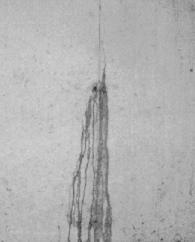
| Cracks in a concrete wall provide a conduit for water, mud, and other substances, and, if not filled, can lead to the structural degradation and ultimate failure of the wall. The wall shown in the photo was filled soon after this photo was taken, which eliminated the problem. |
 |
 |
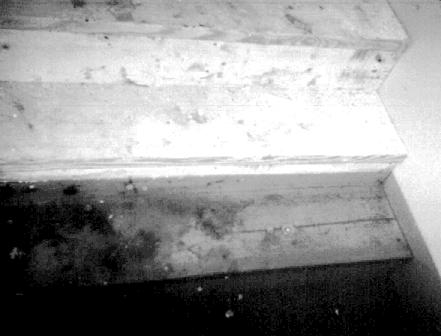 |
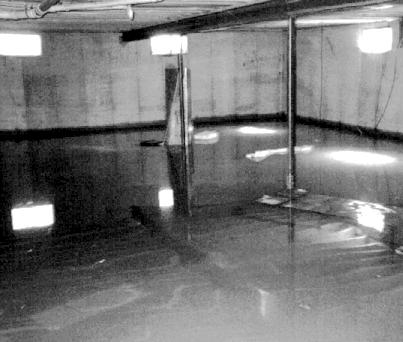
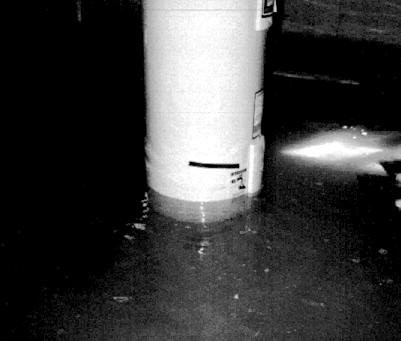
| The basement of this house was flooded in one night with more than a foot of water due to a rainfall event. It took over two days to pump the water out. Luckily this flooding occurred while the house was still under construction, so only a water heated was damaged. If the house had been occupied, the damage would have been worse. An engineering investigation revealed that the sewer had not been connected to the city line. As a result, water pouring into a basement sump pit through the foundation drain had no outlet, and accumulated in the basement. |
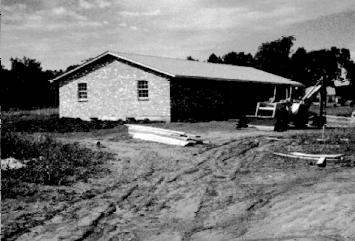
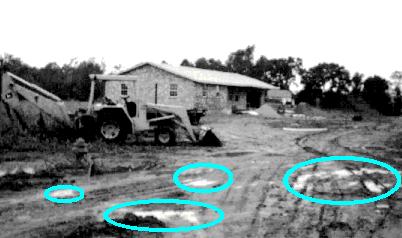
| Grading is often overlooked by homebuyers as inconsequential, but an improperly graded lot can result in flooding, rot, and foundation settlement. As low spots may not be easily detactable, it is advantageous to look at grading during or shortly after a rainfall event, as water will pond in low spots. In the two photos below, the one on the left was taken on a dry day, the one on the right on a wet day. Notice the puddles in the one on the right (circled in light blue), indicating low spots and potential drainage problem locations. |
 |
 |
| All contents copyright 2002 by Michael H. Schrader. |
| Last updated -- 6/11/02 |
 |