 |
|
|
|
|
|
|
|
|
|
|
|
|
|
|
|
|
|
|
|
|
|
|
|
|
|
|
|
|
|
|
|
|
|
|
|
|
|
|
|
|
|
|
|
|
|
|
|
|
|
|
 |
|
|
|
Traffic Engineering |
|
|
|
Besides a Traffic Engineering-focused Master's Degree program at the University of Tennessee, Knoxville, and Doctoral program at Wayne State University in Detroit, Michigan, Michael H. Schrader, Ph.D.,P.E., has spent most of his years in the public sector as a Traffic Engineer. Dr. Schrader served three years as a traffic engineer in Springfield, Illinois; fifteen months as the Traffic Operations Engineer of Little Rock, Arkansas; a year as the Transportation Planner for Dallas County, Texas; seven years as a Traffic Operations Engineer for Tulsa, Oklahoma; a year as the City Traffic Engineer of Charleston, WV; and devoted much of his efforts as the staff engineer of Metroplan, the Council of Governments for Central Arkansas, and as the Public Works Director of Cabot, Arkansas, addressing traffic-related issues. In addition, Dr. Schrader taught Transportation Engineering course at Wayne State University in Detroit and Minnesota State University, Mankato, and a Traffic Engineering course at Minnesota State University, Mankato. |
|
|
|
School Speed Zone Study, Springfield, Illinois |
|
|
|
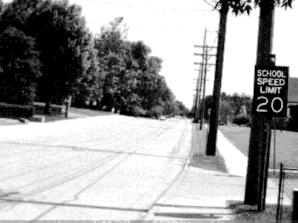
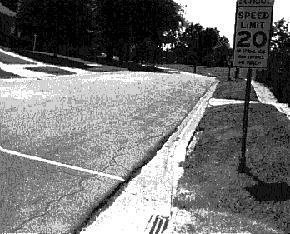
The school speed study was conducted in 1990 and was an analysis of the effect on speeds of various traffic control devices, both active and passive, both traditional and non-traditional, in school zones. Two of the non-traditional passive devices, lateral stripes spaced at decreasing distances as one approached the school zone and 8' long pavement markings indicating the speed and the end of the zone, showed possible speed reductions. Of the active devices, Dr. Schrader's study showed that fiber optic displays were not only clearly visible in direct sunlight, but were also the most effective at reducing speeds. Dr. Schrader presented his school speed study to fellow engineering practitioners at the 1999 meeting of the Transportation Research Board, and his study has since become one of the selected handful of technical papers published as part of the Transportation Research Record. |
|
|
|
 |
|
|
 |
|
|
|
|
|
|
(Fiber optic sign used to reduce speeds in school zones, Springfield, Illinois) |
|
|
|
|
(Transverse striping used to reduce speeds in school zones, Springfield, Illinois) |
|
|
|
|
|
|
Citywide Sign Inventory, Springfield, Illinois |
|
|
|
Dr. Schrader spent three years inventorying over 16,000 signs in Springfield, and creating a system for tracking the location and maintenance of these signs. Included in this system was a method for determining sign expenditures by neighborhood, street, ward, and type. This inventory resulted in the identification and removal of all deficient signage, either in physicality or application; improved logistics of signing operations, as the inventory allowed for the focusing of efforts in the same geographic area at the same time; improved budgeting, as information about maintenance and replacement costs became easily accessible. |
|
|
|
Traffic Calming |
|
|
|
Dr. Schrader has spent much of career in Traffic Engineering conducting research, both in academia and in the workforce, on how to alter dangerous driver behaviors such as speeding and cutting through heavily populated residential areas on narrow residential streets. Dr. Schrader designed a permanent chicane for the city of Maumelle, Arkansas, for the purposes of calming traffic passing through a residential neighborhood. While at Cabot, Dr. Schrader experimented with less expensive temporary devices for traffic calming, which were easily removed when requested by the neighborhoods. |
|
|
|
Other Traffic Engineering Projects and Experience |
|
|
|
Waco 25th &26th Street Couplet--Waco, Texas |
|
|
|
Dr. Schrader created a methodology for evaluating proposed operational changes to the 25th and 26th Street Couplet which not only included traffic operation and safety issues but also economic redevelopment and neighborhood "quality-of-life". Using this methodology, several different one-way operation and two-way operation alternatives were ranked for each evaluator, with the aggregate ranks being based on the sum of the individual ranks. |
|
|
|
Baylor University Parking Study --Waco, Texas |
|
|
|
Dr. Schrader evaluated and analyzed accumulation, turnover, and survey data to determine parking adequacy, trends, and characteristics of parking on the campus of Baylor University. Parking data for twelve other universities was also compiled to provide a basis for comparison and inferences. Conclusions regarding parking characteristics and supply, and recommendations for improving parking, both short term and long-term, were then made based on the input data. |
|
|
|
Traffic Signal Design -- Granbury, Texas |
|
|
|
Dr. Schrader designed a signal system for a future intersection along a major highway. Schrader's design included wiring layout, phasing, pole foundations, and placement. |
|
|
|
Traffic Impact Analysis -- Addison, Texas |
|
|
|
Dr. Schrader performed a complete analysis of the impact of a proposed commerical development. This analysis included the gathering and interpretation of field data with respect to traffic flow characteristics. |
|
|
|
I-635 Frontage Roads Traffic Control Plan -- Dallas, Texas |
|
|
|
Dr. Schrader designed a traffic control plan for the complex reconstruction of the I-635 frontage roads between Hillcrest Road and Coit Road in northern Dallas. I-635 is the major corridor in this part of Dallas, carrying traffic volumes in excess of 200,000 vehicles per day; thus, the traffic control plan was designed to minimize the impedence to the traffic carrying capacity of this crucial corridor. |
|
|
|
Special Projects Engineer (Traffic), City of Springfield, Illinois
Traffic Operations Engineer, City of Little Rock, Arkansas
Public Works Director, City of Cabot, Arkansas
Senior Transportation Planner, Dallas County, Texas
Public Works Director/City Engineer, City of Balch Springs, Texas
Traffic Control Engineer, City of Tulsa, Oklahoma
City Traffic Engineer, Charleston, WV
Taught Transportation Engineering, Wayne State University;
& Minnesota State University, Mankato
Taught Traffic Engineering, Minnesota State University, Mankato |
|
|
Served as: |
|
|
|
|
|
|
Back to Index |
|
|
|
All content copyright 2019 by Michael H. Schrader, Ph.D., P.E. |
|
|
|
Last updated 5-12-2019 |
|
|
|